
-

Светомир Кудесник posted an update in the group General recommendations for creating a startup or small business in the herbal field.
1 month, 4 weeks ago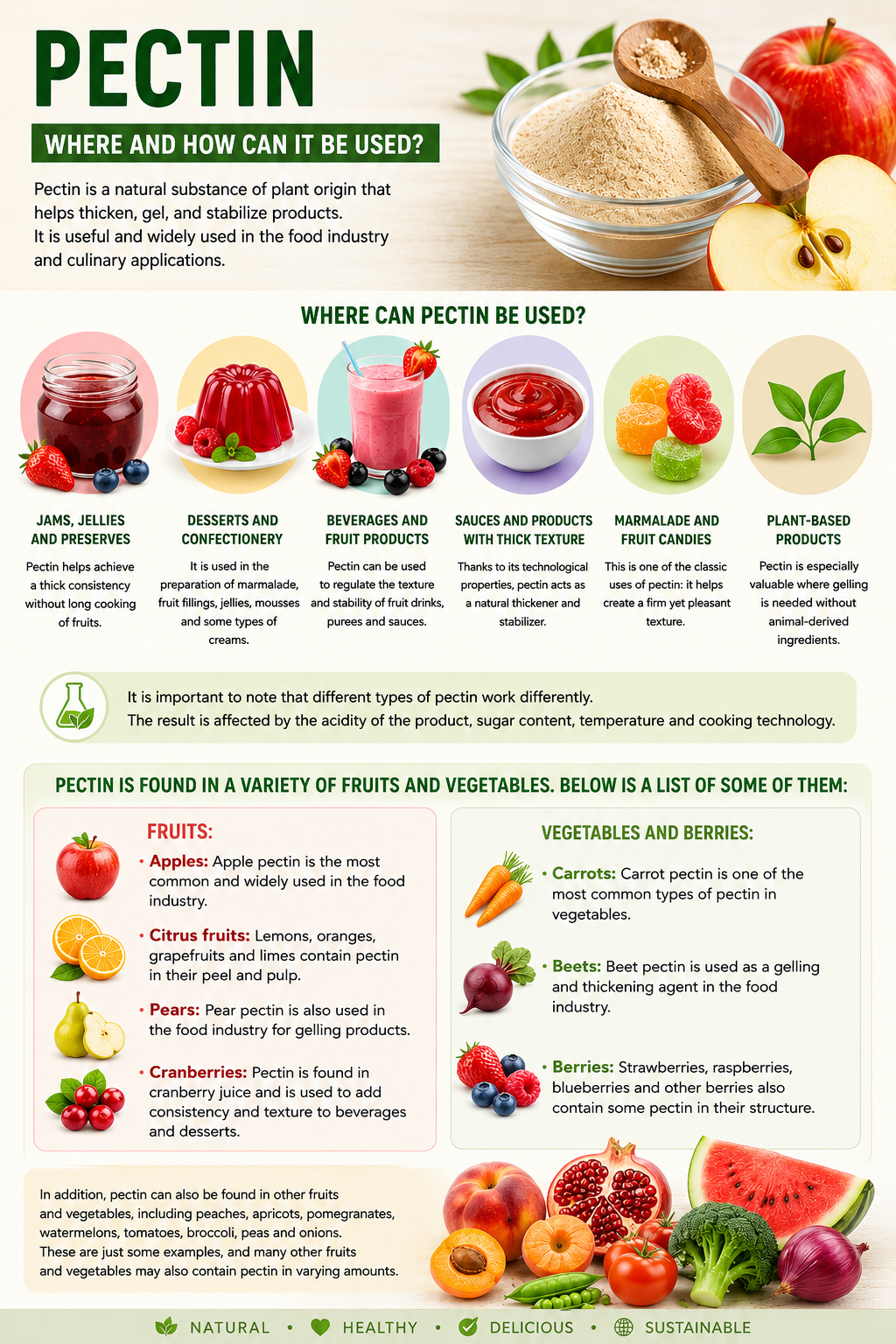
Светомир Кудесник posted an update in the group General recommendations for creating a startup or small business in the herbal field.
1 month, 4 weeks ago🍏 Pectin: Where and How Can It Be Used?
Pectin is a natural plant-based substance that has the ability to bind water and form a gel-like structure. This is why it is so widely used in cooking and food production.
Where can pectin be used?
🍓 Preserves, Jams, and Confitures
Pectin helps create a thick consistency without the need to cook fruit for a long time.
🍰 Desserts and Confectionery
It is used to make marmalade, fruit fillings, jellies, mousses, and certain types of creams.
🥤 Beverages and Fruit Products
Pectin can be used to regulate the texture and stability of fruit drinks, purées, and sauces.
🥣 Sauces and Thick-Textured Products
Thanks to its functional properties, pectin can act as a natural thickener and stabilizer.
🍬 Marmalade and Fruit Candies
This is one of the classic uses of pectin: it helps create a firm yet pleasant texture.
🌱 Plant-Based Products
Pectin is particularly useful when gelling is required without the use of animal-derived gelatin.
It is important to keep in mind that different types of pectin work differently. The final result depends on factors such as the acidity of the product, the amount of sugar, temperature, and the preparation method.
Pectin is found in various fruits and vegetables. Below are some examples:
Fruits:
Apples: Apple pectin is one of the most common types of pectin and is widely used in the food industry.
Citrus fruits: Lemons, oranges, grapefruits, and limes contain pectin in their peel and pulp.
Pears: Pear pectin is also used in the food industry for gelling products.
Cranberries: Pectin is found in cranberries and cranberry juice and can help provide consistency and texture to beverages and desserts.
Vegetables:
Carrots: Carrots contain pectin as part of their natural plant cell structure.
Beets: Beet-derived pectin can be used as a gelling and thickening agent in food applications.
Berries: Strawberries, raspberries, blueberries, and other berries also naturally contain varying amounts of pectin.
In addition, pectin can be found in many other fruits and vegetables, including peaches, apricots, pomegranates, watermelons, tomatoes, broccoli, peas, and onions. These are just a few examples, and many other fruits and vegetables contain pectin in varying amounts.

For IOS and IPAD browsers, Install PWA using add to home screen in ios safari browser or add to dock option in macos safari browser
